Band of AgeLab Researchers Present at HCII 2026 in Montréal
by Niels Wu
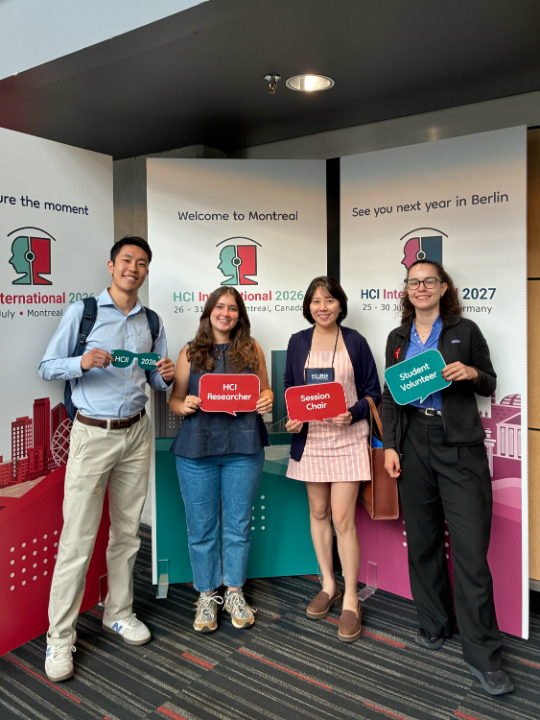
This July, a group of AgeLab researchers presented at the 28th International Conference on Human-Computer Interaction in Montréal, Canada.
Chaiwoo Lee chaired a session titled “Designing New Products and Experiences for Aging In Place” which included presentations from Nour Al Maalouf, Elisa Cardamone, and Céline Aldenhoven. Also featured in the session were former AgeLab postdoctoral researcher Sheng-Hung Lee and Shrey Maheshwari from Indiana University-Bloomington.
Al Maalouf’s presentation, titled “Designing Instructions for Older Adults’ Installation of Multi-Device Smart Home Systems,” detailed her two-part study examining older adults’ experiences with setting up an array of smart home technologies, with a particular focus on how setup instructions impacted participants’ confidence and independence. A key difficulty uncovered by Al Maalouf is that unclear transitions between different setup steps like needing to switch between apps create confusion that could lead a user to abandon the setup process.
Next, Cardamone gave her presentation, titled “Empathy for Ageing in Place: Expert Perspectives on Ageing Simulation Suits and Design Decision-Making.” Leveraging interviews with researchers using the AgeLab’s AGNES (Age Gain Now Empathy System) suit, it explored the use of aging simulation as a design research method. Cardamone concluded that while simulation can be a powerful embodied experience, its value for driving positive design decisions is limited unless paired with intentional guided reflection.
Lastly, Aldenhoven’s presentation, titled “LifeTomorrow: A Socio-Technical System Supporting Aging-in-Place and Informal Caregiving,” outlined her process for developing LifeTomorrow, a digital ecosystem designed to support older adults’ aging in place. LifeTomorrow consists of two apps for older adults and their caregivers that provide control of smart home systems, and allow for remote monitoring and health information sharing, respectively. During her presentation, Aldenhoven detailed challenges she encountered during the development process such as ensuring the privacy of sensitive information or managing the effects of device fragmentation.
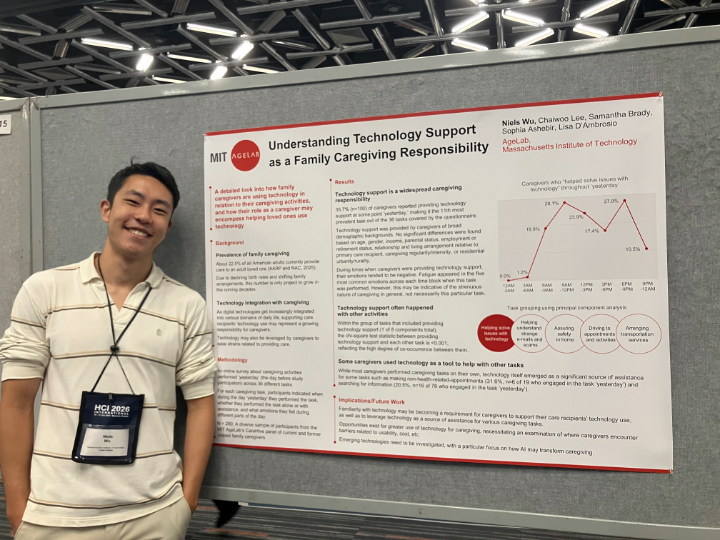
In addition to the session chaired by Lee, Niels Wu presented a poster at the conference titled "Understanding Technology Support as a Family Caregiving Responsibility.” Drawing on data from a previous survey of the AgeLab’s panel of unpaid family caregivers, it provided a detailed look into how caregivers are using digital technologies as part of their caregiving routine; this may include both how caregivers are helping their care recipients solve issues with technology as well as how technology can act as a source of support for other tasks. Helping with technology was found to be a common task performed by a diversity of caregivers and often happened at the same time as other tasks like understanding strange e-mails and arranging transportation services.
The 29th International Conference on Human-Computer Interaction will take place from July 25-30, 2027 in Berlin, Germany.
- Share