Designing Across Generations: A Conversation with Erika, Creator of MindLink
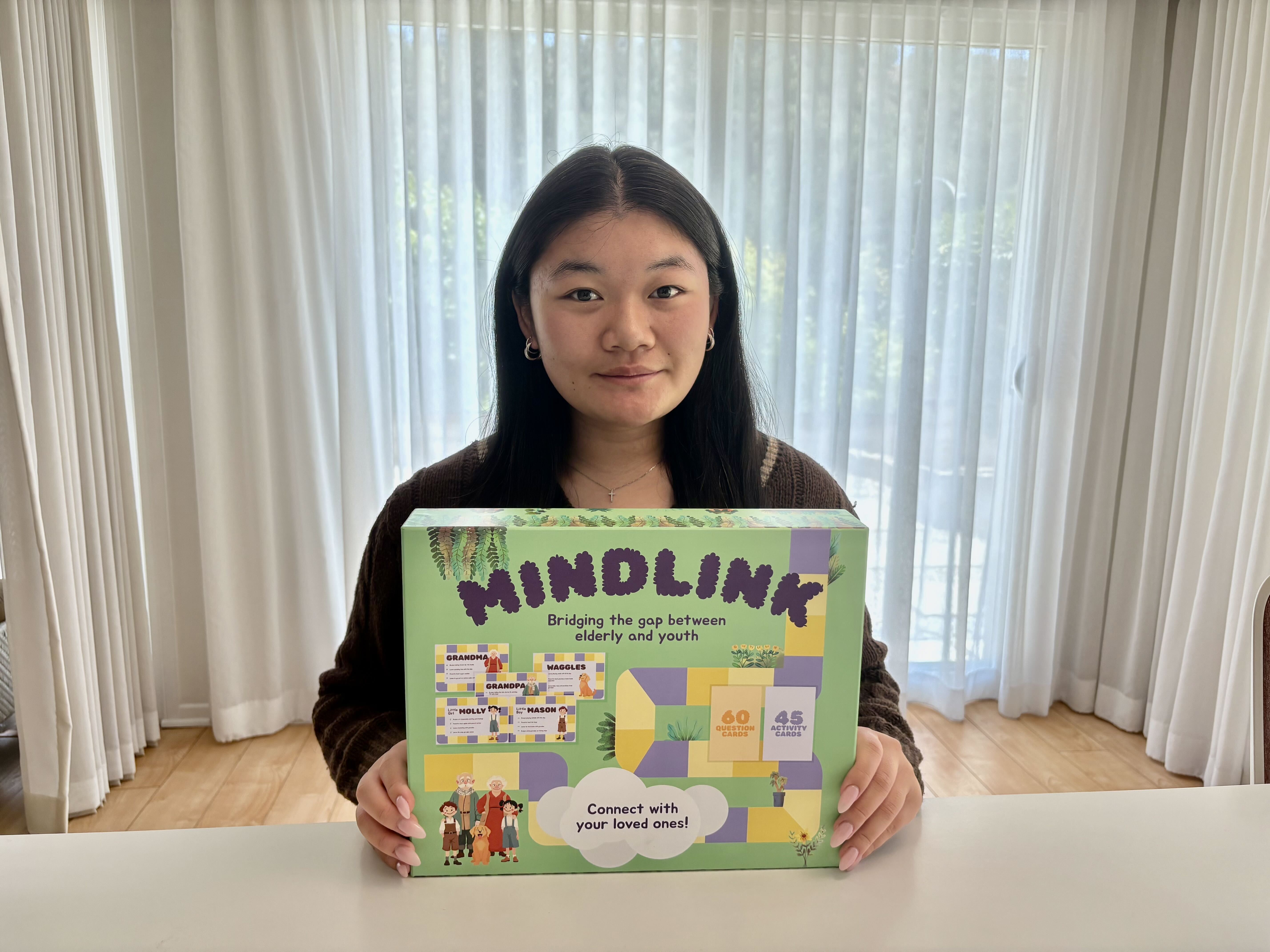
What inspires a high school student to explore the connections between generations? For Erika, the answer is rooted in her own experiences with family, volunteering, and a desire to help people connect.
We recently had the opportunity to chat with Erika, a California-based high school student who developed an intergenerational board game called MindLink. Through her project, Erika explored questions of aging, social connection, and how people of different generations can learn from one another. We spoke with her about what sparked her interest, what she learned along the way, and why she believes young people have an important role to play in shaping an age-inclusive future.
Our conversation, edited for clarity, is below.
What sparked your interest in creating intergenerational connections?
Growing up, both of my grandparents lived with dementia. Since I only visited them in Malaysia during the summers, I didn't realize until later how valuable those moments together really were. In my culture, close relationships between grandchildren and grandparents also aren't as common, which made me reflect on how easily meaningful moments can be lost.
That perspective became even stronger while volunteering at my local senior home. I noticed that many residents had few family members who came to visit. It made me realize that social isolation affects many older adults and not just those living with dementia.
Can you tell us a little about MindLink and how you envisioned people using it?
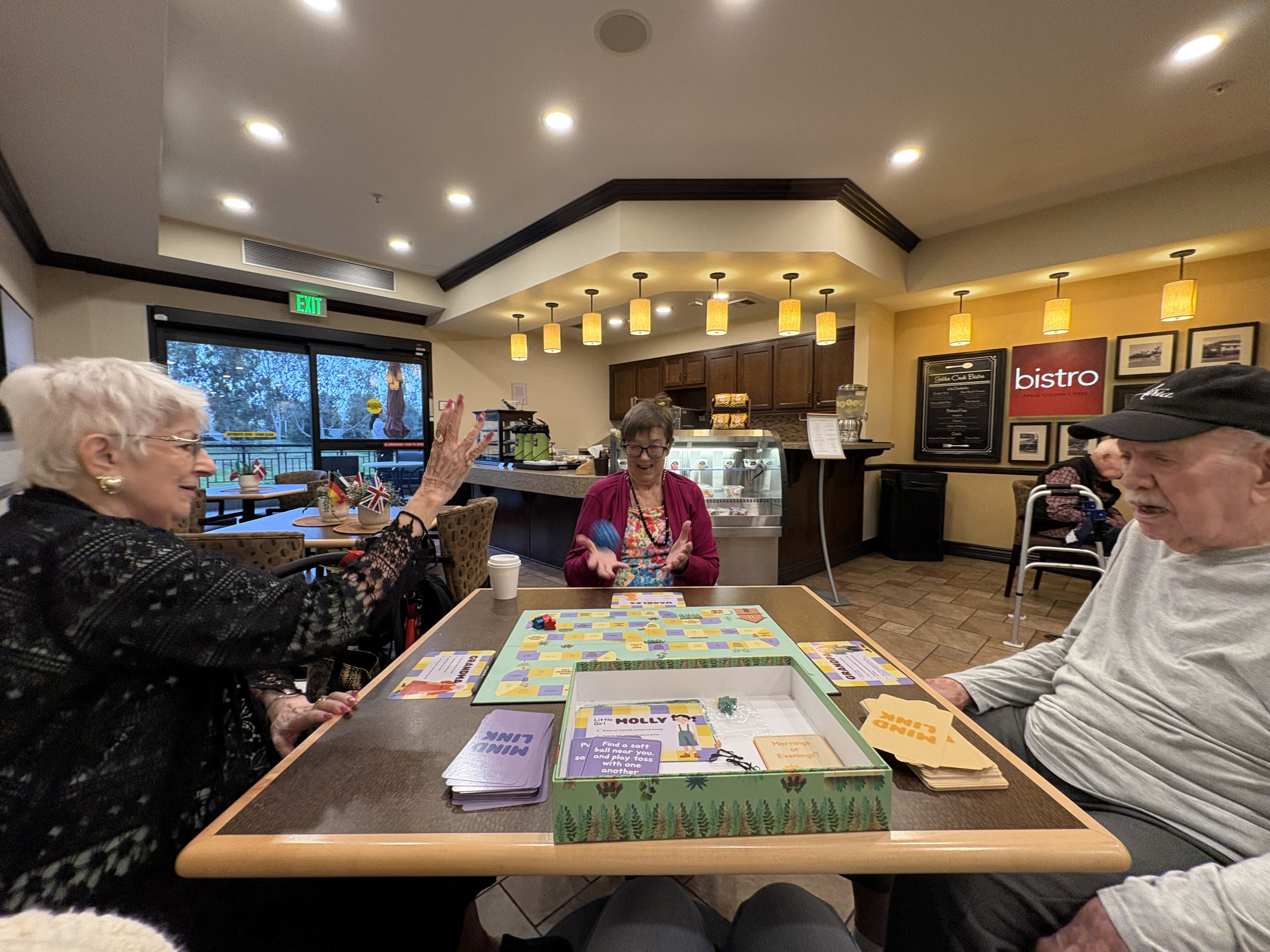
MindLink is an intergenerational board game designed to strengthen connections between youth and older adults, including those living with dementia, through memory-sharing questions and accessible, seated activities. It helps families and communities create new memories, reduce social isolation, and foster stronger relationships across generations. Players move around the board and draw Question or Activity Cards that encourage them to share memories, advice, stories, and life experiences, or participate in simple activities together. The game follows characters including Grandma, Grandpa, Molly, Mason, and Waggles as they build connections and create memories together.
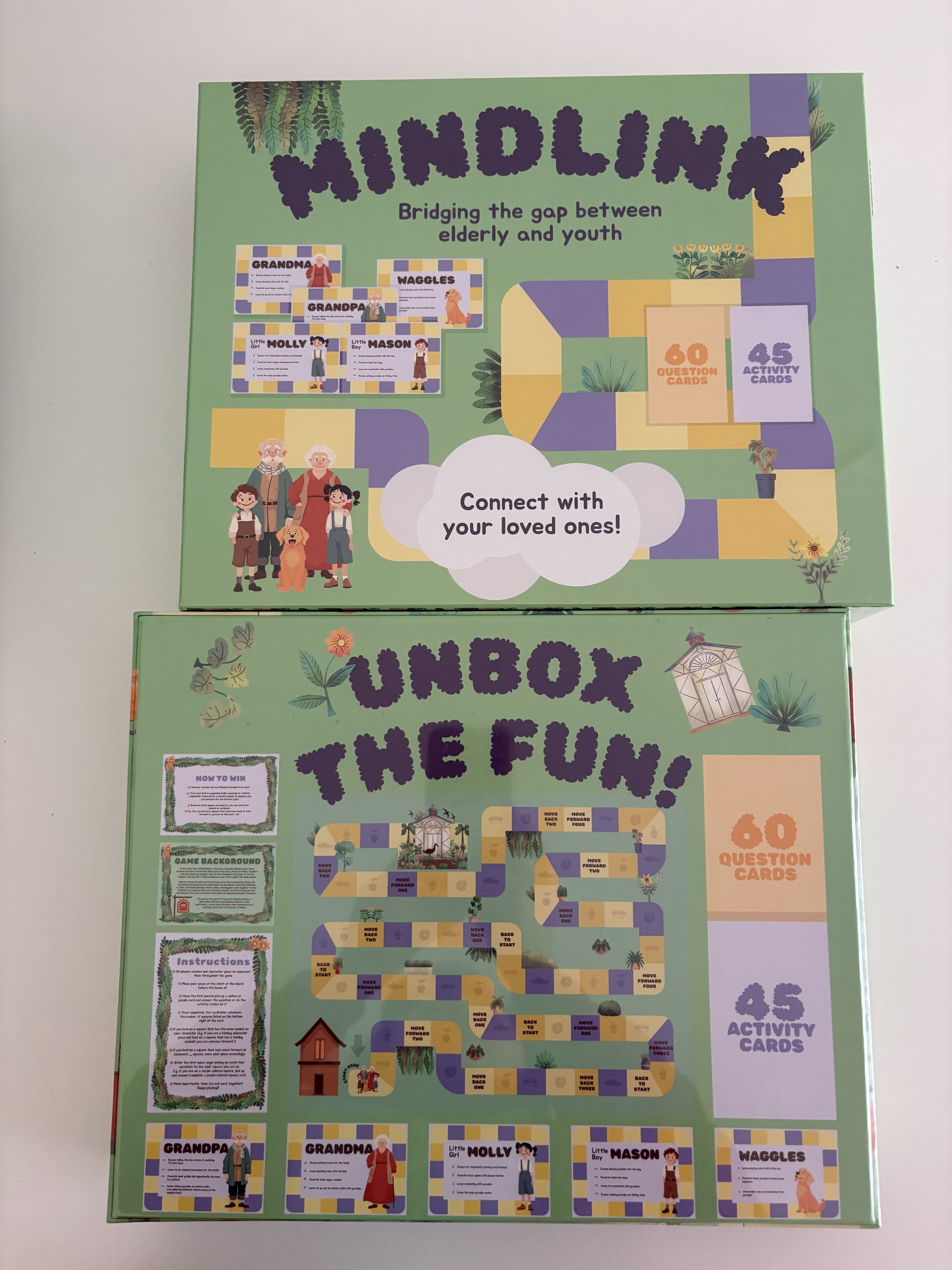
What led you to choose a board game as the format for your project?
I wanted to create something that addressed social isolation directly, not just by giving older adults another activity, but by creating an opportunity for people to sit down, interact, and learn about one another.
What did the design process look like, and how did your ideas evolve along the way?
I conducted background research on dementia-friendly designs, including color choices, readability, appropriate activities, and ways to ask questions without creating pressure around memory. I also worked closely with the Program Director at the senior home where I volunteered. She reviewed my game materials and helped me understand how different residents might respond to certain questions and activities.
Most importantly, I brought MindLink directly into senior communities. Playing the game with residents allowed me to hear their reactions and feedback firsthand and identify things I would not have noticed on my own.
At the same time, I had to make the game engaging for younger players. One of the biggest design challenges was finding the middle ground between something that felt fun and approachable for youth while remaining comfortable and meaningful for older adults.
I also worked with a board game enthusiast, Angel, who helped me think about gameplay, engagement from a player's perspective, and ultimately how to elevate my game to the next level.
What I found most valuable [in gathering feedback] was that these perspectives were different. Instead of relying on one person's opinion, I could compare feedback from seniors, caregivers, designers, board game players, and researchers.
What have you learned through the experience of designing MindLink? Did it challenge any of the assumptions you had about older people, or about aging as a whole?
One thing I understand much better now is that aging does not mean losing curiosity, personality, or the desire to connect with others. Before MindLink, I often thought about dementia primarily in terms of memory loss. Through working with senior communities, I learned that there is so much more to a person than their cognitive abilities. Residents still have stories, humor, preferences, opinions, experiences, and personalities that they want to share and make them who they are. That changed how I designed MindLink. Instead of making a game focused on what someone might have difficulty doing, I wanted to create something that focused on what they could contribute.
[Another] assumption I had was that activities for older adults needed to be significantly different from activities for younger people. Through MindLink, I realized that many of the things people enjoy such as laughing, telling stories, being challenged, sharing opinions, and spending time with others, aren’t just limited by age. The difference is often in how an activity is designed and whether people feel comfortable participating. That realization helped me stop thinking about MindLink as a “game for seniors” and start thinking about it as a game for generations to play together.
If you could change one misconception younger people have about aging, what would it be?
I would change the idea that getting older means becoming disconnected from the world or losing the ability to contribute. Through MindLink, I've met residents who are incredibly funny, curious, opinionated, creative, and full of stories. Their age doesn't define their personality or the value of what they have to share.
I think younger people sometimes focus so much on what older adults may need help with that they forget to ask what older adults can teach, contribute, and share.
What do you think younger and older generations can learn from one another?
I think that the relationship can go both ways. Older generations carry decades of experiences, stories, lessons, and perspectives that younger people may never encounter themselves. At the same time, younger generations can introduce older adults to new technology, ideas, interests, and ways of seeing the world.
What I’ve learned through MindLink is that intergenerational connection shouldn't be viewed as one generation teaching another. Both generations have something to contribute. Sometimes the most meaningful interaction happens simply when people have the opportunity to listen, share, and connect to one another.
To wrap things up, what advice would you give to other younger folks interested in tackling real-world challenges through design and innovation?
Start with a problem you genuinely care about and not just an idea that sounds impressive.
Then, involve the people you're designing for as early as possible. Some of the most important changes I made to MindLink came directly from seniors, caregivers, activity directors, and other people who actually interacted with the game and had background knowledge they could give me.
Most importantly, don't be afraid to revise your ideas. My first version of MindLink was very different from what exists today because every round of feedback gave me something new to improve and new ideas I wanted to implement within the game.
Above all, I would say to build something that you genuinely care about. If the problem you're solving is something close to your heart, then it becomes easier to put your all into.
- Share