AgeLab Makes a Strong Showing of Presentations at GSA 2025
by Niels Wu
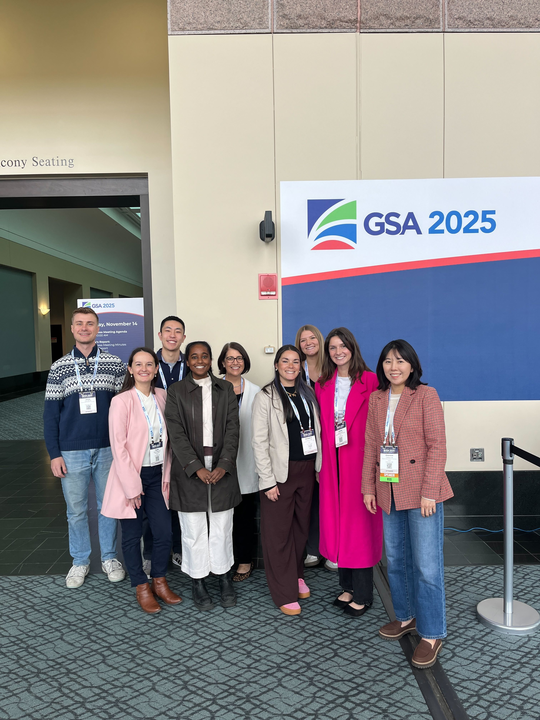
AgeLab researchers gave a blitz of presentations at the 2025 Annual Scientific Meeting of the Gerontological Society of America, hosted at the Hynes Convention Center in Boston. GSA’s theme for this year’s conference was “innovative horizons in gerontology.”
The AgeLab organized two symposium sessions at the conference. The first symposium, chaired by Taylor Brennan, explored attitudes and beliefs toward artificial intelligence as it increasingly impacts how people live, work, and age. This session featured four presentations from AgeLab researchers:
- Drawing on cross-industry interviews with human resource managers and executives, Samantha Brady highlighted the potential for AI to make workplaces better for older workers while noting concerns over usability and security, particularly in multigenerational settings.
- Niels Wu presented findings from a survey of the AgeLab’s Caregiver Panel on how family caregivers feel about using AI as part of their caregiving and how factors like education or income level might impact their adoption of such technologies.
- Taylor Brennan presented mixed-methods data from a workshop done with the AgeLab’s Lifestyle Leaders Panel on how people aged 85 and older view AI; while participants’ overall experience with AI was low, there was a high degree of openness to using AI to support their health, memory, and safety.
- Lauren Cerino presented survey data on older adults’ openness to receiving information or advice from AI tools, showing that older age groups felt more skeptical overall.
The second symposium, which was chaired by Lauren Cerino and Lisa D’Ambrosio, included presentations about how people make financial decisions at different stages in their lives, using findings from national surveys.
- Lisa D’Ambrosio gave the first presentation, on how middle-income Americans perceive their financial situation, seek finance-related information, and plan for their future.
- Chaiwoo Lee presented on wealthy Americans’ sense of financial preparedness for older age, as well as their attitudes toward various financial products like annuities, life insurance, and disability insurance.
- Rounding out the session, Katie Warren gave a presentation on how men and women of different ages think about preparing for retirement; people close to or past the point of retirement said that planning should begin at a younger age, reinforcing the importance of proactive financial planning across the lifespan.
Samantha Brady also gave two additional presentations at the conference. Her first presentation, given as part of a session on the implications of caregiving on people’s employment and finances, leveraged a hiring experiment that revealed biases against family caregivers, who were less likely to be hired and were perceived as being less available, reliable, and committed than other candidates. Her second presentation referenced a paper on employment and family caregiving roles, and how their combination may bring about both positive and negative effects on psychological health. It explored differences in psychological impacts between White and Black individuals and emphasized the importance of understanding the experiences of family caregivers through an intersectional lens. Brady’s paper was selected as an Editor’s Choice article in the Social Sciences section of The Journals of Gerontology: Series B.
Lastly, Sophia Ashebir presented a poster on an ongoing AgeLab study with individuals aged 85 and older about how they define, perceive, and experience ageism or age bias. The study leverages PhotoVoice methodology, a process where participants take photos that document their everyday experiences, then discuss their photos in an interview. PhotoVoice falls into a category of methods called participatory action research, which emphasizes the co-creation of knowledge with research participants that can help produce a richer understanding of their lived experiences.
- Share